Articles
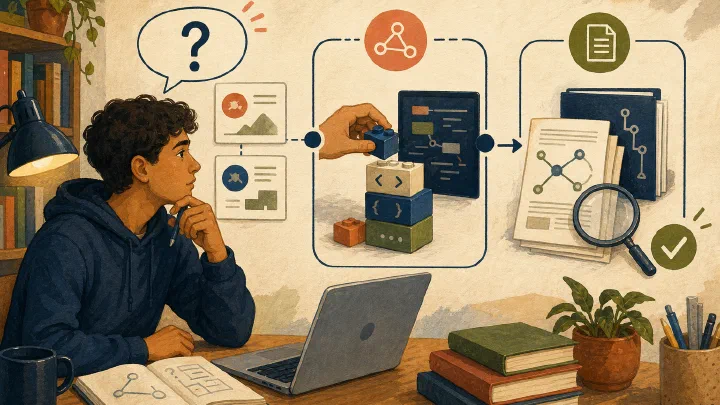
Use interpreters to discover questions, builders to find firsthand context, and primary evidence to reach a bounded conclusion about an AI claim.
Articles
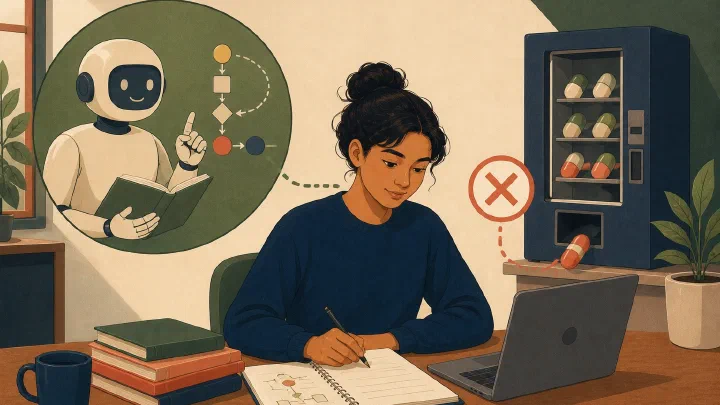
Use hints, questions, layered explanations, practice, and feedback to keep AI-assisted work centered on learning.
Articles
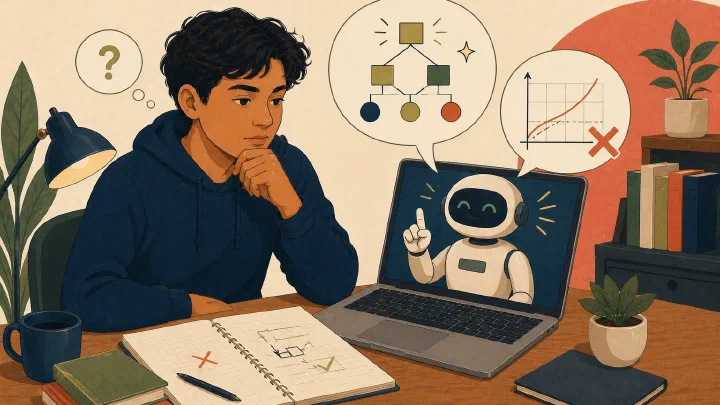
Use a known–unknown–attempt record to preserve independent reasoning and ask AI a focused, verifiable question.
Articles
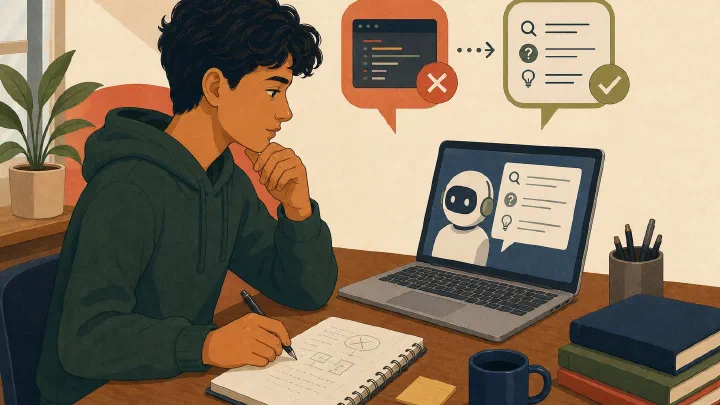
Build a permitted minimal reproduction and ask AI for hypotheses and investigative steps instead of replacement code.
Articles
Review generated code line by line for requirements, assumptions, dependencies, tests, security, scope, and explainability.
Articles
Recognize invented citations and APIs, sample-only code, hidden assumptions, and unnecessary complexity in AI output.
Articles
Translate course-specific AI rules into clear boundaries for tutoring, substitution, disclosure, privacy, and published solutions.
Articles
Reduce an AI request to the minimum permitted evidence, replace real values when possible, and stop when sanitization cannot protect the material.
Articles
Use a small set of prompt patterns for hints, investigation, explanation, tests, reasoning review, quizzes, and manual verification.